
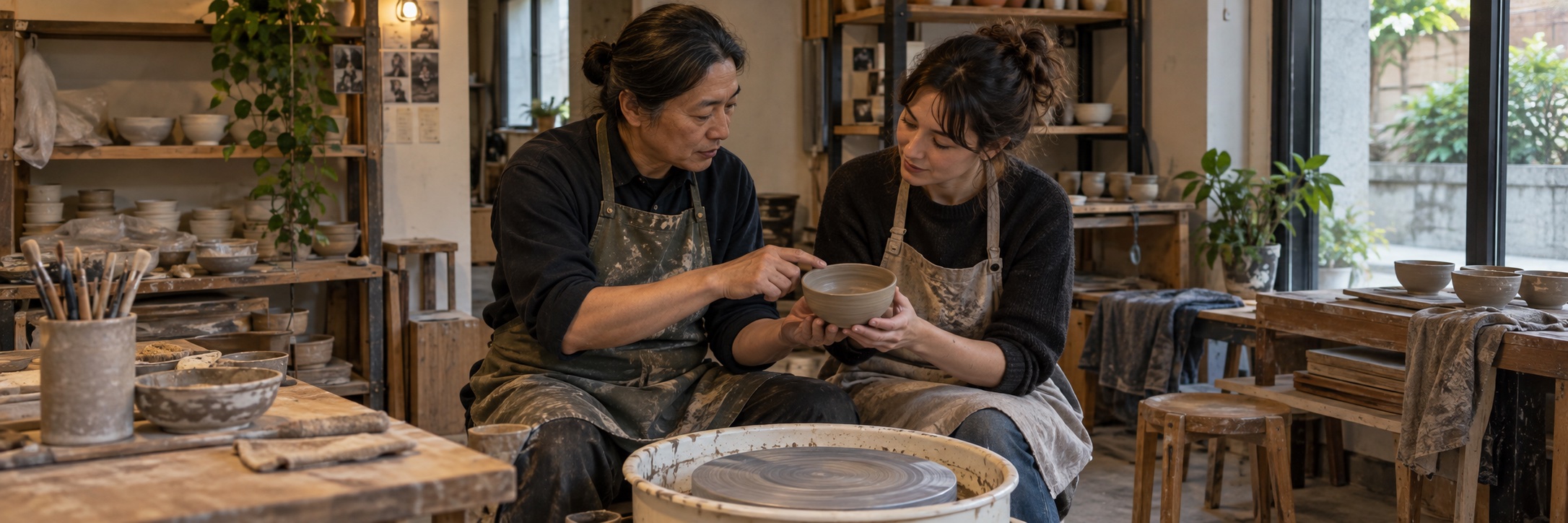
Learn through studio experience
Spend Time with Clay—and Understand the Work Behind It
For aspiring pottery studio owners, developing makers, and businesses investing in staff skills, a single workshop may only be the beginning. Art Journey Taipei offers an enquiry-led approach to pottery studio immersion and private training: time to practise, ask focused questions, and explore learning goals in a working studio setting. Tell us where you are starting, what you want to understand, and how long you can spend in Taipei. Together, we can discuss a programme that fits your experience, priorities, and the studio’s available teaching arrangements.
Your creative journey
How the Programme Comes Together
Define your goals
Share your experience, interests, and the skills you want to develop.
Practise and observe
Combine focused instruction with agreed opportunities to understand studio workflow.
Review and progress
Discuss what you have learned and identify practical next steps.
Make an informed choice
Explore Your Programme
A different purpose from a leisure workshop
A recreational workshop is a welcoming introduction to making something with clay. Studio immersion is for people who want to spend more time understanding techniques, working habits, and the questions that arise through repeated practice. The emphasis is on your learning goals rather than fitting everyone into the same session. You may want to strengthen your own making before opening a studio, or help a staff member become more confident with a particular task. Describe the intended outcome so we can discuss what can realistically be addressed through an agreed programme.
For prospective studio owners
If you are considering opening a pottery studio, spending time learning in an existing studio can help you ask better questions about the work involved. Start with your own level of pottery experience and the kind of studio you hope to develop. A programme might focus on building practical confidence, understanding how a project moves through stages, or observing selected aspects of a working environment where available. This is a learning experience tailored to an agreed scope. Business planning, commercial advice, and a complete studio-launch curriculum are not automatically included in pottery instruction.
For staff and developing teams
Businesses can enquire about private training for individual staff members or a small group. Tell us their current skills, the work they are expected to perform, and the areas where more confidence would help. A useful programme has specific objectives rather than a broad request to learn everything about pottery. For example, you may want to discuss foundational making techniques, more consistent practice, or clearer explanations of a process. Any workplace-related learning, teaching observation, or participation in studio activities needs to be arranged explicitly, with attention to the studio’s normal operations.
Strengthen handbuilding foundations
Handbuilding can provide an accessible way to explore clay while developing more careful control of form and construction. Depending on your starting point, private learning may cover pinching, coiling, slab building, joining, surface choices, and how to assess a piece as it develops. Repetition gives you opportunities to notice what works and where a different approach is needed. Bring examples of pieces you would like to make or techniques you have found difficult. We can discuss a sequence of exercises and projects that connects the foundations to your own interests.
Develop wheel-throwing practice
For learners interested in the pottery wheel, focused instruction can address the techniques appropriate to their current ability. The aim is to give practice a clear direction rather than simply spending more hours at the wheel. Share what you have already tried, the forms you are working toward, and where you tend to get stuck. Availability of equipment and the balance between demonstration and independent practice will be agreed when planning. Progress varies from person to person, and a short programme should have achievable goals rather than promises of mastering every form.
Understand the sequence of studio work
A finished ceramic piece represents several stages, and not all of them happen during one class. An immersion enquiry can include questions about preparation, making, drying, finishing, glazing, and firing, within the scope the studio can offer. Seeing how stages connect helps learners understand why timing and careful handling matter. Some processes may not coincide with your visit, so observation cannot be assumed simply because you attend for several days. Let us know which stages interest you most. We can explain what is possible during the proposed dates and what requires another arrangement.
Ask about teaching-related learning
Some prospective owners or staff may be interested in how beginners experience pottery instruction. If that is one of your goals, mention it when enquiring so we can discuss whether teaching observation or a related learning component is appropriate and available. This is distinct from a regular pottery lesson and needs a defined scope. Useful questions might concern explaining a technique, adapting a task to a learner’s experience, or recognising where someone needs help. An agreed observation opportunity does not by itself constitute teacher certification, an employment placement, or responsibility for supervising other students.
Choose a realistic learning schedule
A focused short series may suit someone with a specific technical question, while a longer sequence can allow more practice and review. If you are travelling to Taipei, provide your available dates and whether you can return for later sessions. The best structure depends on what you want to learn and the time required for your projects. We can discuss how taught sessions, any agreed practice time, and relevant studio processes fit together. Attendance over several days does not mean unrestricted access to the studio; access and support arrangements should be clear before booking.
Leave with a clearer direction
An immersion programme can help you understand your strengths, identify the skills needing more practice, and make more informed decisions about further learning. Keep track of your questions and the techniques you try so review conversations are useful. Where appropriate, bring photographs of previous work or a shortlist of learning priorities. The outcome will depend on the agreed programme and your participation, rather than a guaranteed commercial result. If your longer-term goal is a studio business, consider this one part of your preparation alongside the other technical, operational, and business knowledge you need.
Find your format
Programme Options
Programme options
Focused Private Series
- Work on specific pottery techniques
- Personal goals guide the sessions
- Suitable scope agreed before booking
Programme options
Studio Immersion
- A connected programme of learning
- Practice and agreed observation
- Dates and studio access confirmed
Programme options
Staff Training
- Individual or small-group enquiries
- Objectives linked to current skills
- A tailored training proposal
Guidance and planning
Before You Book
What is included?
Your proposal will set out the agreed number of sessions, teaching time, materials, and any additional charges relevant to the chosen activities. Fees depend on the programme and group arrangements. Please check these details before confirming, particularly if your package includes pottery work that requires later processing. A clear quote helps you compare options and choose a schedule that suits your plans.
How do we arrange dates and language?
Send your preferred dates and any flexibility, along with the language you would feel most comfortable learning in. We will discuss availability and confirm the teaching arrangements for your programme. If you are visiting Taipei, include your arrival and departure dates so the proposed schedule fits your stay. Please wait for confirmation of dates, times, and meeting arrangements before making plans around a class.
Can the programme be personalised?
Tell us what you want to achieve, the experience of the people attending, and anything that would help them participate comfortably. We can discuss possible adjustments within the programme’s scope and available resources. A private package is planned around agreed goals, rather than an unlimited choice of activities. Before booking, confirm the final format, payment arrangements, and terms for any changes to your schedule.
Our creative studio
Learn with Art Journey Taipei
Our studio brings together artists and learners through hands-on creative experiences. The instructor for your programme will be confirmed when we discuss its focus, dates, and teaching needs.
 Da RongStudio artist
 Ginny ChanStudio artist
Explore the programme
Inside Pottery Learning
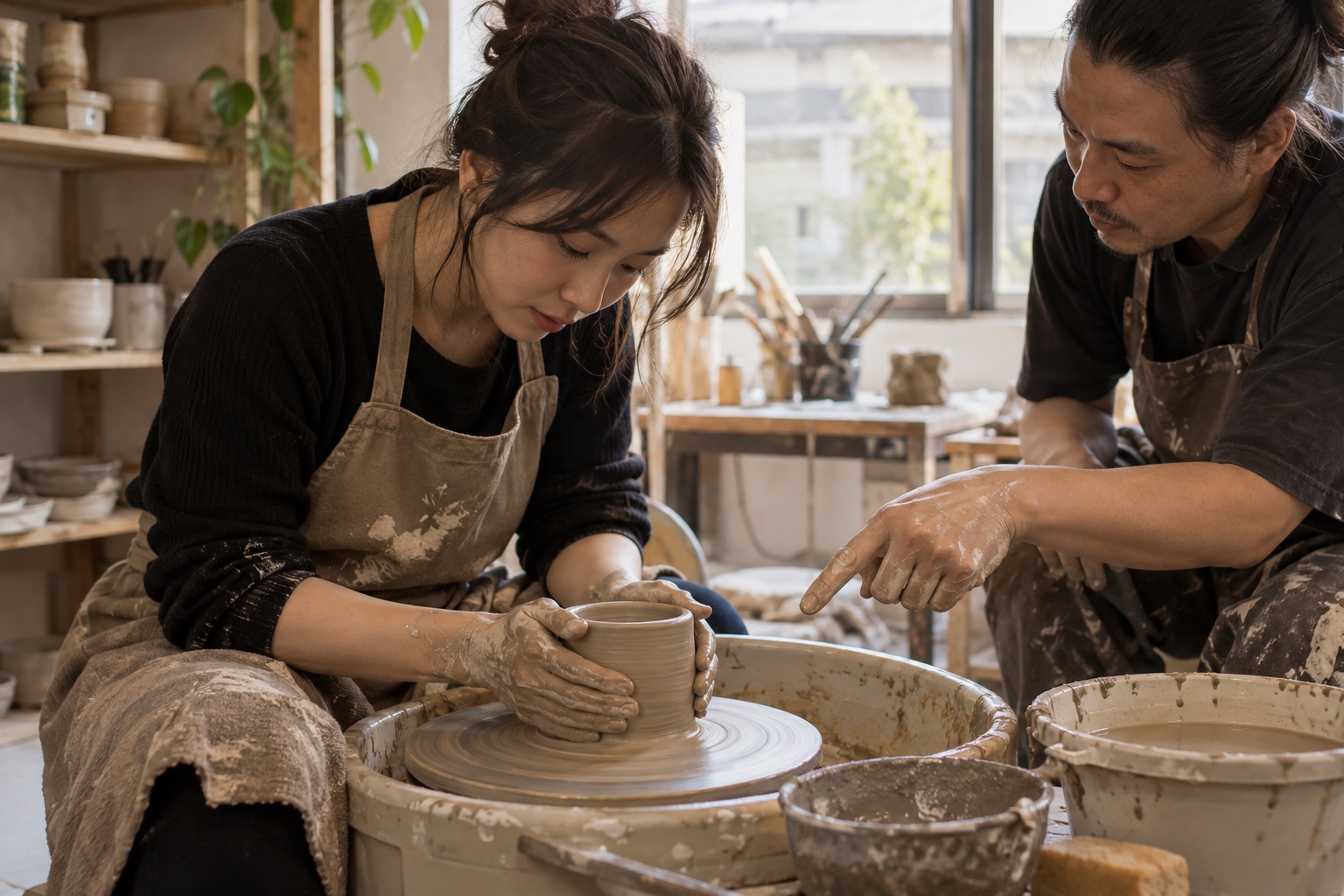
Discuss Your Studio Learning Goals
Tell us your pottery experience, whether you are learning personally or sending staff, your goals, available dates, and preferred programme length. Include any studio workflow or teaching questions you would like to discuss.
See our pottery workshops and multi-session courses for existing recreational and skill-development options.
